
Pedagogy describes the teaching and learning interaction. Through our own experiences and by learning from others, we have identified certain “high return” practices for learning. These are promoted across the school.
All staff and students can clearly articulate what they do and why they do it. Belonging is visible, inclusion is lived, and every student is known, affirmed and supported. We share in a learning culture where student participation is imperative.
We cultivate a growth mindset by embracing challenges, learning from mistakes, and recognising effort as essential for growth. When we appreciate and nurture each child’s unique capabilities, we adopt a strength-based view that recognises their individuality and creates a safer, more empowering environment where every child can thrive.
As children made in the image of God, the dignity of every child is central to our Catholic faith. At Holy Family, students’ perspectives and experiences are valued as essential contributions to the unique context and culture of our school.
We are committed to creating an environment where all can flourish, supported by purposeful infrastructure, shared agreements and consistent practices. Essential to our learning culture is a shared purpose in which all staff take responsibility for maintaining high standards of excellence.

At Holy Family, our pedagogy is grounded in cognitive science. Learning happens when information moves into long-term memory through explicit, well‑designed teaching. Teaching is carefully structured to avoid overload and support knowledge retention through rehearsal and review.
Digital Technologies for Learning, Creativity and Inclusion
At Holy family Catholic School, information technologies are used intentionally to enhance access, creativity and engagement in learning. As an Apple Distinguished School, staff and students have access to Apple devices, including iPads and laptops, which are used as tools for learning, collaboration, communication and creative expression.
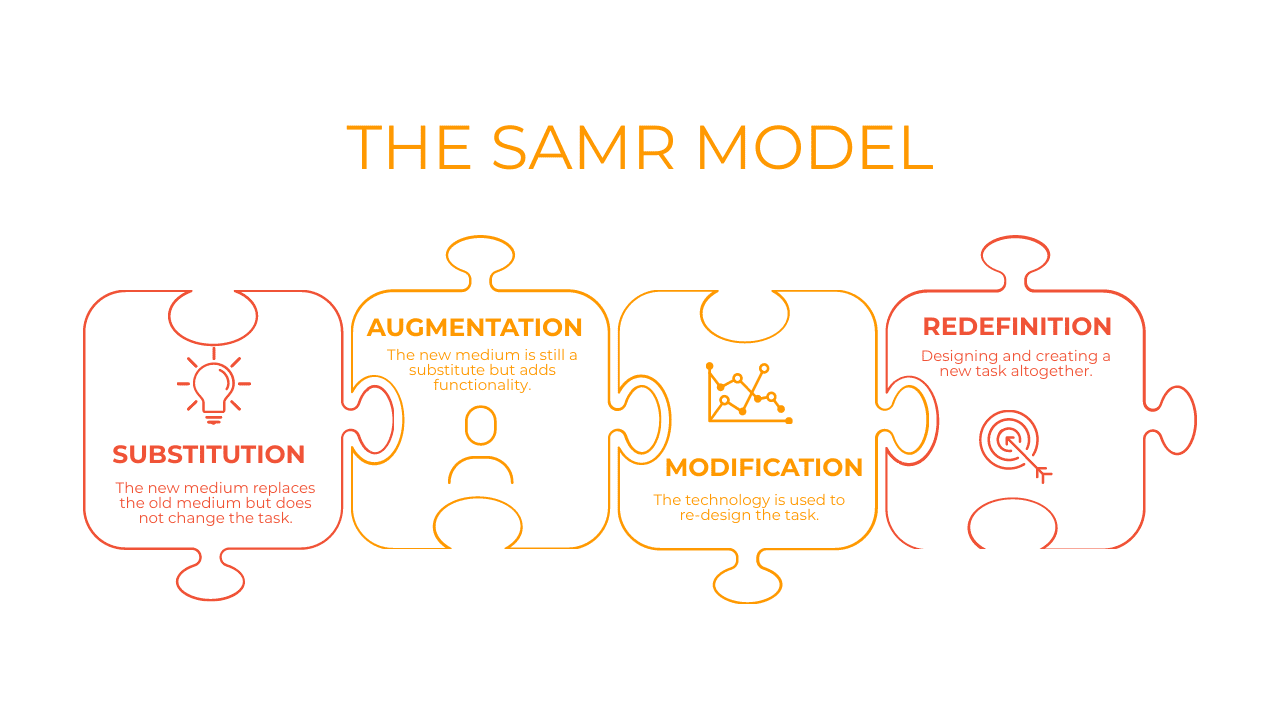
The SAMR model supports teachers to consider how digital technologies can substitute, augment, modify or redefine learning experiences. Inclusive digital tools enable students to engage with learning, enhance and extend their understanding, reflect on their progress and take ownership of their learning.