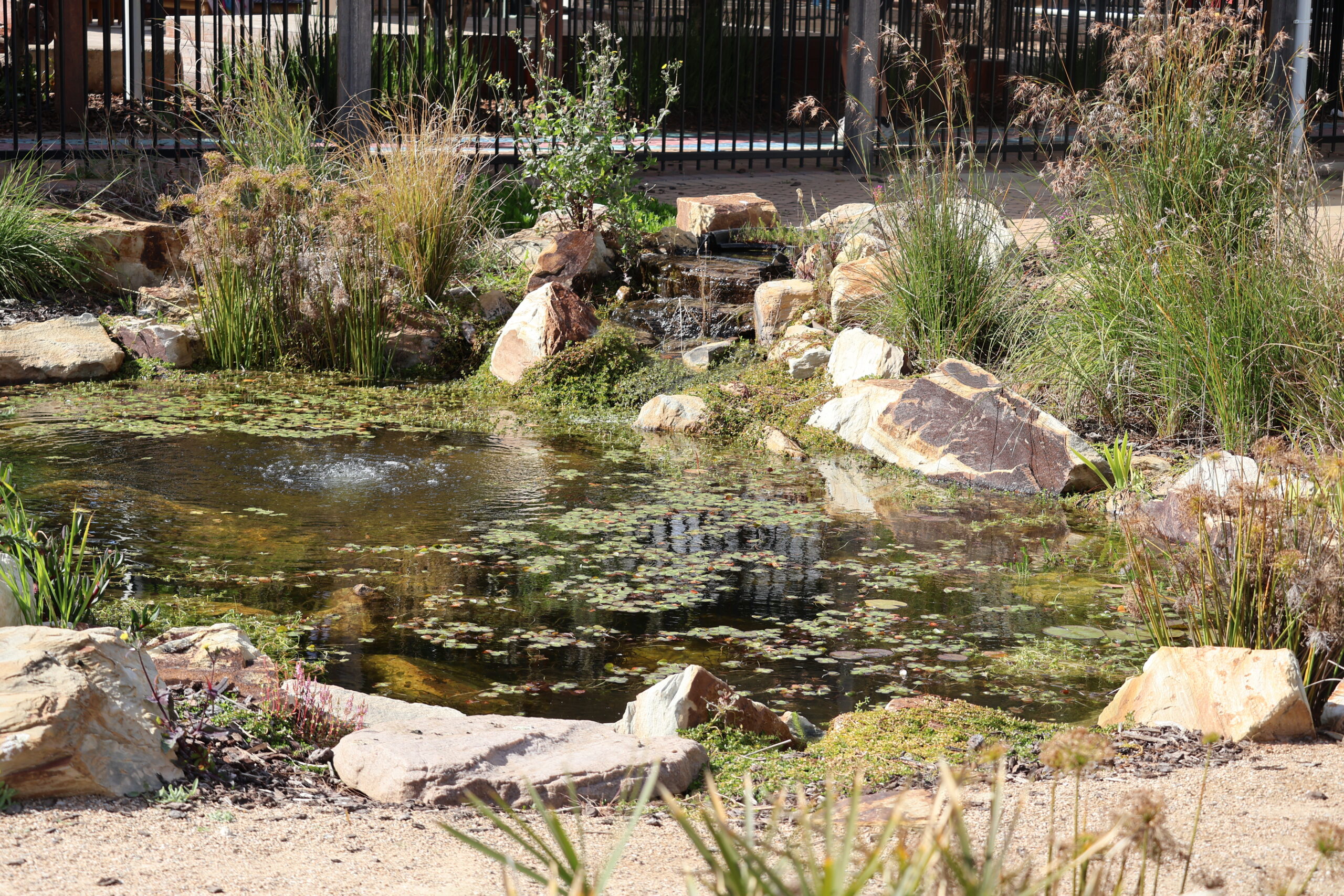
The Kuyangani Wetlands is home to many different visitors.
Dragonflies
Dragonflies are insects and have three stages in their life cycle: egg – larva – adult.
Adult dragonflies have a long and slender abdomen, two pairs of wings and three pairs of legs. They also have very large eyes.
Keep your eyes peeled for our dragonfly friends:
Blue Skimmers
One of Australia’s most common dragonflies. Often perches on the ground, or low sticks and logs. Adult males fly around the edges of waterbodies relatively close to the surface.

Tau Emerald
The Tau Emerald is a fascinating type of dragonfly. These amazing insects belong to a family called Corduliidae. They are known for their beautiful colors and fast flight.
Wandering Percher
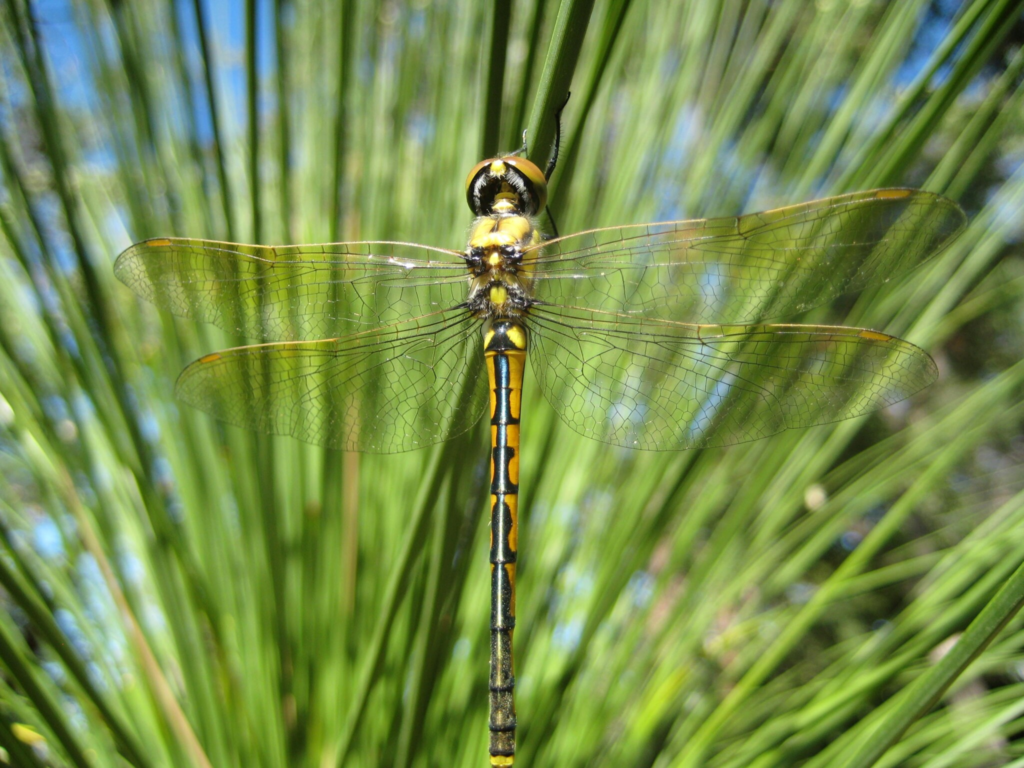
The Wandering Percher is a cool type of dragonfly. It belongs to a family of dragonflies called Libellulidae.
People also call it the Red Percher Dragonfly because of its bright colours!

Wetland Birds
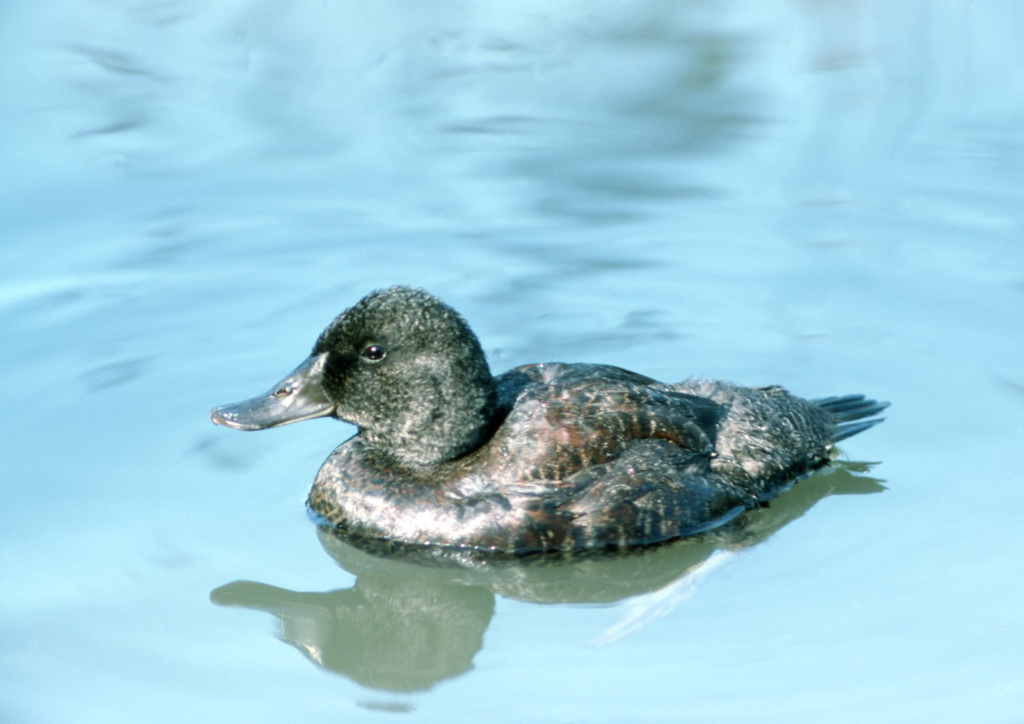
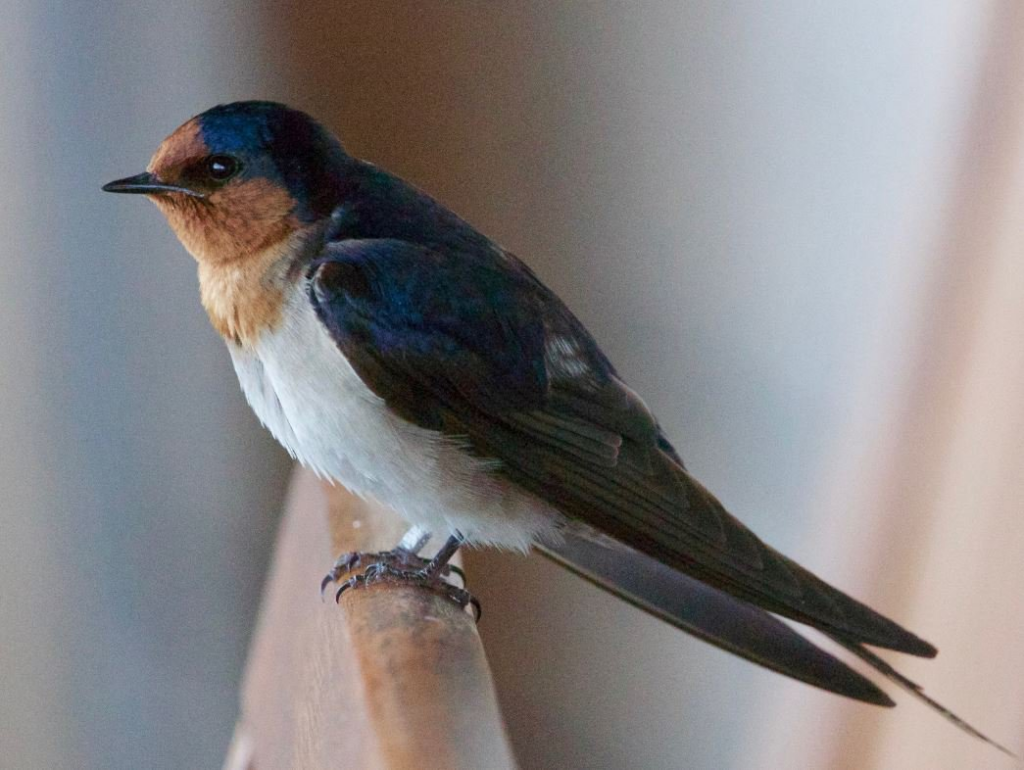
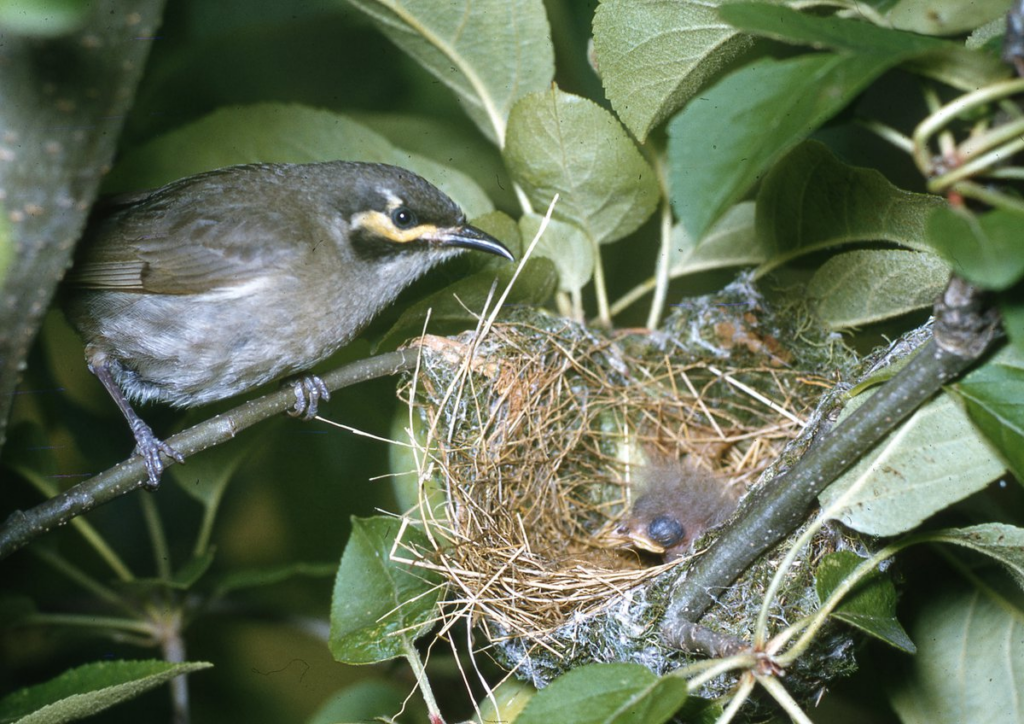
Several native bird species regularly visit our wetlands, including Pacific Black Ducks, Wood Ducks, and Blue-billed Ducks. A particularly familiar resident is the Australian White Ibis (Tjilbruke) and the Yellow-faced Honeyeater, while Welcome Swallows can often be seen gracefully skimming across the water in search of insects.
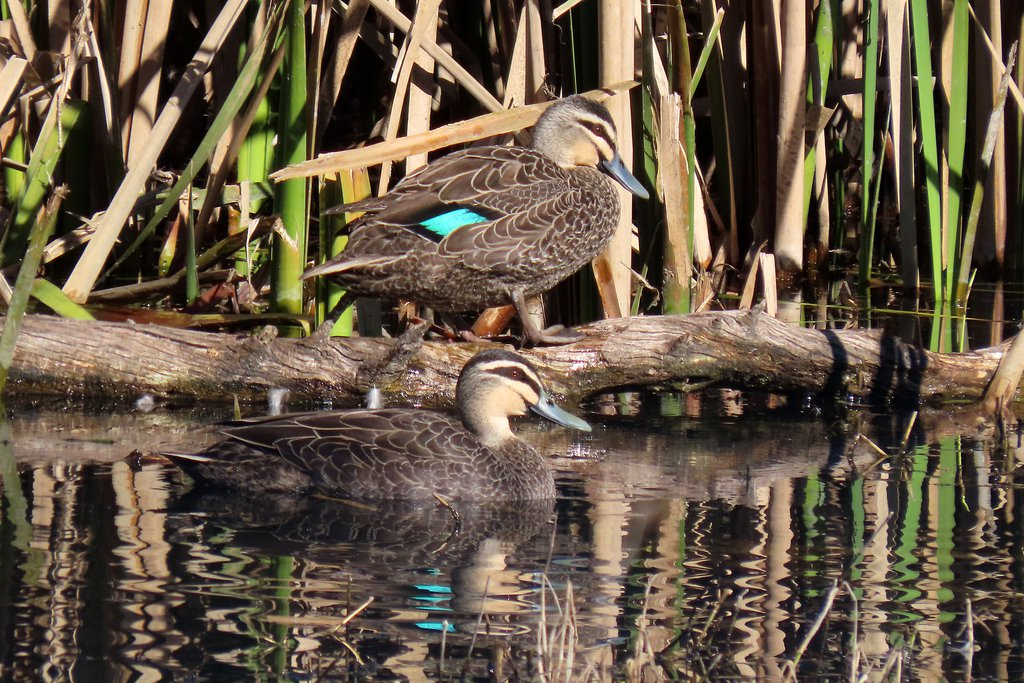
Pacific Black Ducks
The Pacific Black Duck is one of the most versatile of the Australian ducks. It frequents all types of water, from isolated forest pools to tidal mudflats, and is found in all but the most arid regions of Australia.
Wood Ducks
The Australian Wood Duck is a medium-sized ‘goose-like’ duck with a dark brown head and a pale grey body with two black stripes along the back.
Like other waterbirds, the Australian Wood Duck hatches with a covering of waterproof down and can enter the water almost straight away.

Blue-billed Ducks
The Blue-billed Duck is a compact diving duck with males having a large scooped bright, light blue bill.
They are almost wholly aquatic, and are not often seen on land.
Australian White Ibis (Tjilbruke)
The Australian White Ibis is identified by its almost entirely white body plumage and black head and neck. The head is featherless and its black bill is long and down-curved. During the breeding season the small patch of skin on the under-surface of the wing changes from dull pink to dark scarlet.

Welcome Swallows
The Welcome Swallow is metallic blue-black above, light grey below on the breast and belly, and rust on the forehead, throat and upper breast. It has a long forked tail, with a row of white spots on the individual feathers.
Yellow-faced Honeyeater
The Yellow-faced Honeyeater is a medium to small, plainly coloured honeyeater with a slightly down-curved bill. It is dark grey-brown above, with some brown streaking on the head, and paler below with lighter streaks. It has a distinctive, broad yellow face-stripe, bordered with black.
Bee Hotel
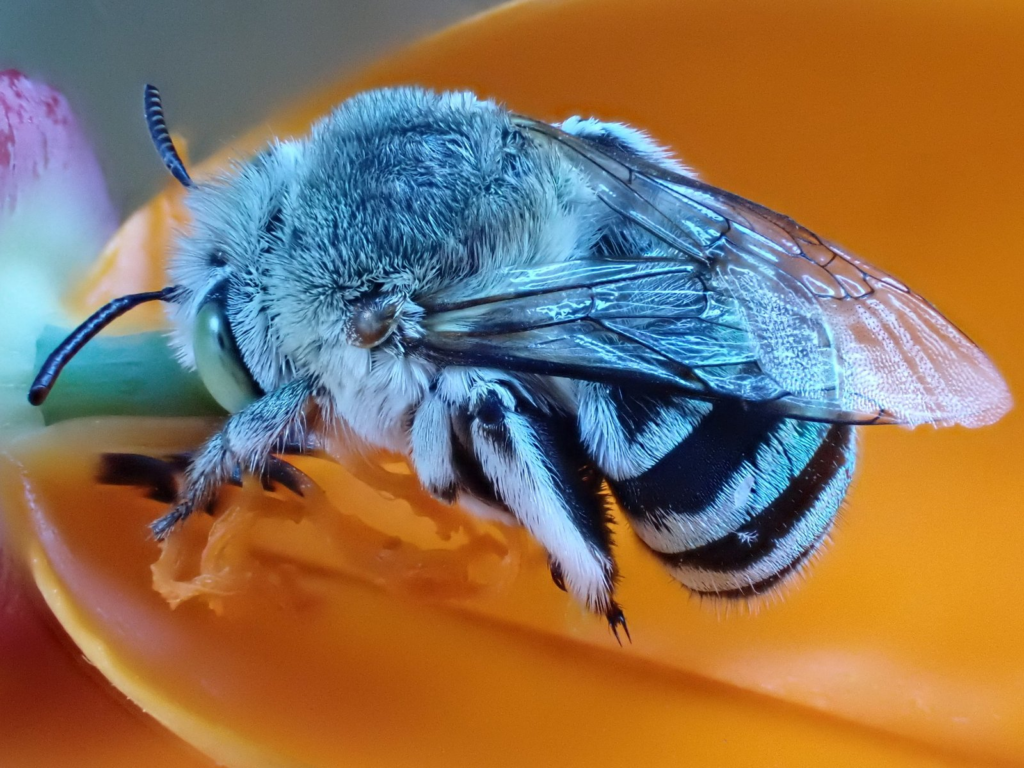
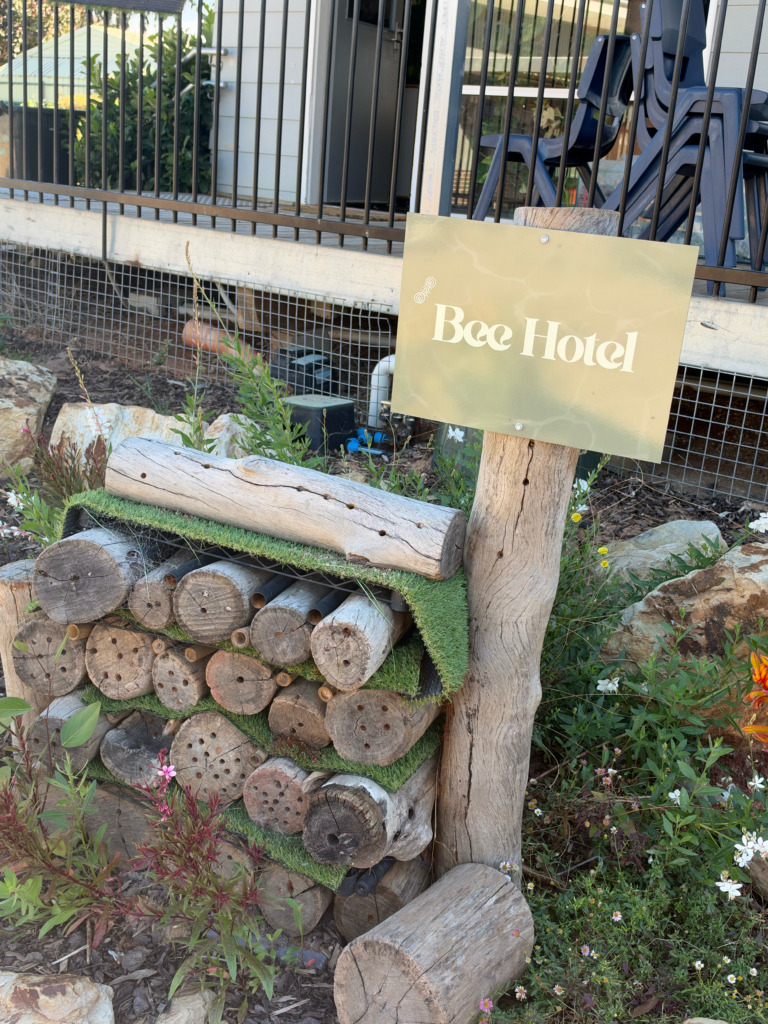
Check out our native bee hotel. South Australia has approximately 200 bee species including Blue Banded Bees.
Unlike Honeybees most are solitary and do not produce honey. They are important pollinators.
They nest in small ground burrows or wood like our bee hotel, preferring undisturbed soil and flowering native vegetation, they are very important pollinators.
Blue Banded Bees
The Common Blue-banded Bee stands out because of the blue bands across its black abdomen and because of its darting, hovering flight pattern.
This species of bee can be differentiated by the other species by the blue/green iridescent hairs on the fore and mid legs.
River Murray Short Neck Turtles
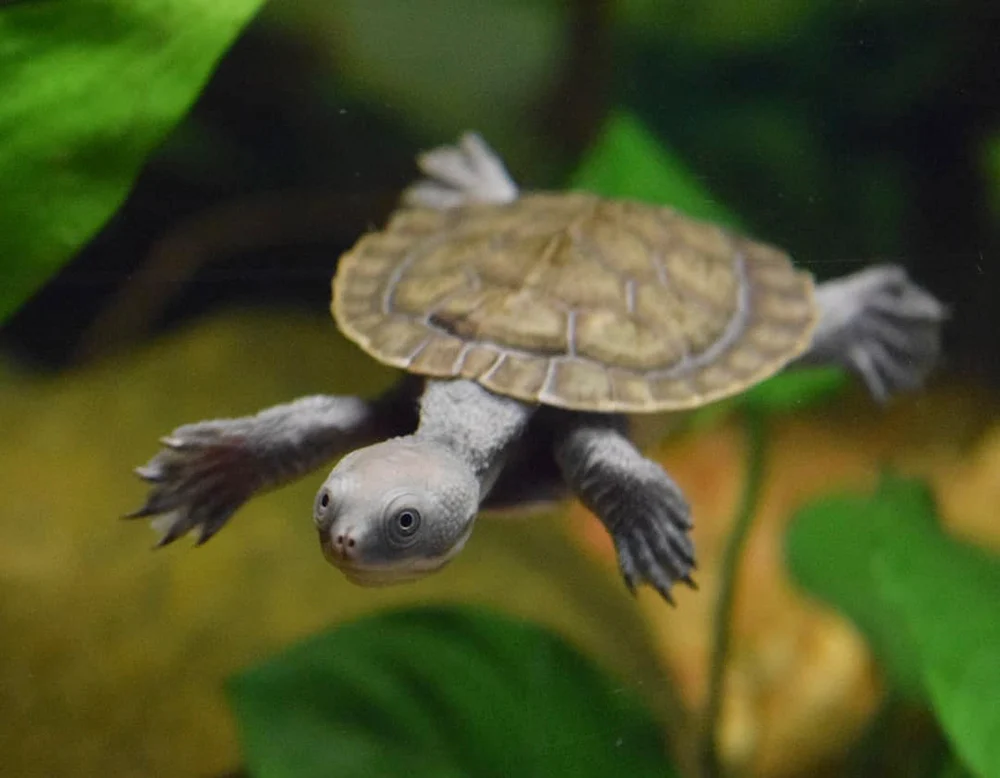
The Murray Short Necked Turtle is a common large freshwater turtle found in the Murray Basin.
They are omnivores and prefer slow moving water and can often be seen basking on logs or the side of our wetlands.
The Murray short-necked turtle is one of the three
species of turtle found in the Murraylands and Riverland
region. Turtles play a crucial role in the River Murray
ecosystem and are culturally significant to the region’s
First Nations.
Our Fish Inhabitants
With these important threatened fish species, our main goal is to breed them successfully in the wetlands and in our aquarium environments and work with our partners to return fish back into their native habitats.
Southern Purple Spotted Gudgeon
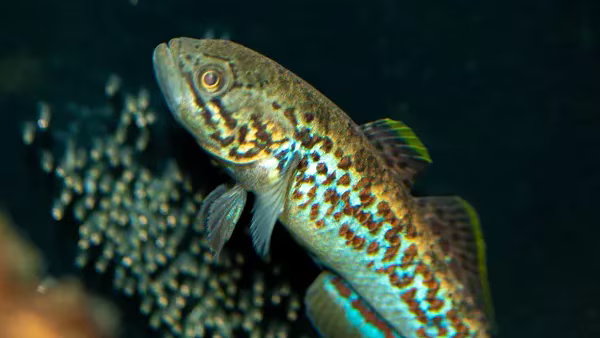
The southern purple-spotted gudgeon (Mogurnda
adspersa) is a small, attractive fish, commonly growing
to 6-12 cm in length.
The body is a yellowish to golden
brown colour, overlaid with dark brown to red and
white spots, interspersed with areas of iridescent bluish-
purple more notably towards the tail.
River Murray Rainbow
Murray River rainbowfish are colourful fish. Their sides are silvery-brown, and have a green or silver sheen. A blue stripe extends from the snout to the caudal fin. The other fins are yellow and marked with orange or red. In males, several orange stripes run laterally across the posterior half of the body.

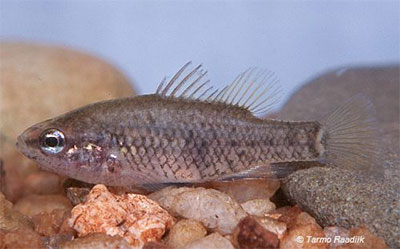
Yarra Pigmy Perch
Murray River rainbowfish are colourful fish. Their sides are silvery-brown, and have a green or silver sheen. A blue stripe extends from the snout to the caudal fin. The other fins are yellow and marked with orange or red. In males, several orange stripes run laterally across the posterior half of the body.